
A few years ago, digital transformation was largely about moving to the cloud, automating processes, and modernizing legacy systems.
𝗧𝗼𝗱𝗮𝘆, 𝘁𝗵𝗲 𝗰𝗼𝗻𝘃𝗲𝗿𝘀𝗮𝘁𝗶𝗼𝗻 𝗵𝗮𝘀 𝗳𝘂𝗻𝗱𝗮𝗺𝗲𝗻𝘁𝗮𝗹𝗹𝘆 𝗰𝗵𝗮𝗻𝗴𝗲𝗱.
Artificial Intelligence has evolved from being a technology initiative into a boardroom priority. “Organizations are no longer asking whether they should adopt AI—they are asking how to do it responsibly, securely, and at scale.”
This shift is redefining executive leadership.
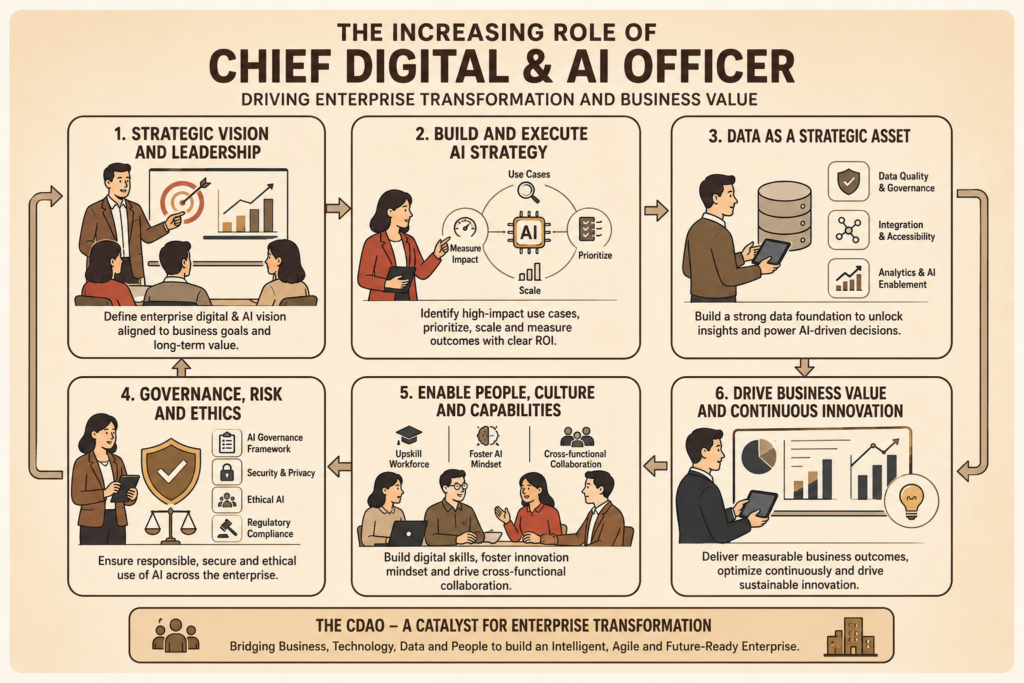
The emergence of the Chief Digital & AI Officer (CDAO) reflects a growing need for leaders who can bridge business strategy, technology, data, governance, and organizational change.
A modern CDAO is expected to:
Build an enterprise-wide AI strategy aligned with business outcomes
Drive digital transformation beyond technology implementations
Establish robust AI governance, security, and ethical frameworks
Unlock value from enterprise data through analytics and AI
Identify high-impact AI use cases with measurable ROI
Foster innovation while effectively managing risk and compliance
Build AI capabilities, culture, and digital skills across the organization
𝗣𝗲𝗿𝗵𝗮𝗽𝘀 𝘁𝗵𝗲 𝗯𝗶𝗴𝗴𝗲𝘀𝘁 𝗺𝗶𝘀𝗰𝗼𝗻𝗰𝗲𝗽𝘁𝗶𝗼𝗻 𝗶𝘀 𝘁𝗵𝗮𝘁 𝗔𝗜 𝘁𝗿𝗮𝗻𝘀𝗳𝗼𝗿𝗺𝗮𝘁𝗶𝗼𝗻 𝗶𝘀 𝗮𝗯𝗼𝘂𝘁 𝗱𝗲𝗽𝗹𝗼𝘆𝗶𝗻𝗴 𝘁𝗵𝗲 𝗹𝗮𝘁𝗲𝘀𝘁 𝗺𝗼𝗱𝗲𝗹𝘀 𝗼𝗿 𝘁𝗼𝗼𝗹𝘀.
In reality, successful AI transformation is about people, processes, governance, and business value.
Technology is only one part of the equation.
As AI becomes deeply integrated into every business function—from finance and HR to customer service, supply chain, and operations—the CDAO will play an increasingly strategic role in shaping the future of enterprises.
The organizations that succeed won’t necessarily be those with the most advanced AI models.
They will be the ones with leaders who can combine vision, execution, governance, and business transformation into a coherent strategy.
𝘛𝘩𝘦 𝘢𝙜𝘦 𝘰𝘧 𝘈𝘐 𝘭𝘦𝘢𝘥𝘦𝘳𝘴𝘩𝘪𝘱 𝘩𝘢𝘴 𝘵𝘳𝘶𝘭𝘺 𝘣𝘦𝙜𝘶𝘯.