

This article drills down why conflict arises and ist of conflicts that typically occurs in IT project teams and some mitigations to avoid them.
1. Accountability Conflicts
Scenario 1: Consultant keeps pushing work back
Typical behavior
- “This isn’t in my scope.”
- “The client hasn’t confirmed.”
- “Let’s take it up next sprint.”
Root Cause
- Avoiding accountability
- Fear of failure
- Overloaded workload
- Lack of ownership
Leadership Response
- Clarify ownership
- Ask for evidence
- Agree on specific timelines
- Track commitments
Scenario 2: Consultant misses deadlines and blames others
Typical behavior
“Integration team delayed us.”
“Testing didn’t complete.”
“Business never responded.”
Root Cause
- Defensive behaviour
- Lack of planning
- Poor risk management
Leadership Response
- Focus on facts
- Review dependencies
- Separate genuine blockers from excuses
- Create accountability without assigning blame
2. Communication Conflicts
Scenario 3: Consultant argues on every topic
Typical behavior
Every discussion turns into a debate.
They challenge almost every decision.
Meetings become exhausting.
Root Cause
- Strong opinions
- Need for recognition
- Poor communication style
Leadership Response
- Encourage constructive challenge
- Time-box discussions
- Ask for alternatives rather than objections
Example:
“I appreciate the challenge. What’s your recommended solution?”
Scenario 4: Consultant speaks disrespectfully
Like your example.
“If you don’t know this, you’re lacking.”
Root Cause
Poor emotional intelligence
Frustration
Ego
Stress
Leadership Response
Address the tone immediately.
Coach privately.
Reinforce team norms.
Scenario 5: Dominates every meeting
Some consultants answer every question.
Others never get a chance.
Root Cause
High confidence
Low awareness
Need for visibility
Leadership Response
Actively invite quieter team members.
Example:
“Thanks. I’d also like to hear Sarah’s perspective.”
3. Collaboration Conflicts
Scenario 6: Knowledge hoarding
The consultant becomes the only person who knows a process.
Documentation is poor.
Leaves become a project risk.
Root Cause
Job security concerns
Poor documentation culture
Leadership Response
Promote documentation
Knowledge-sharing sessions
Cross-training
Scenario 7: Doesn’t help other teams
Response is always:
“That’s not my responsibility.”
Root Cause
Silo mentality
Misaligned incentives
Leadership Response
Reinforce project objectives over functional boundaries.
Scenario 8: Team members criticize each other publicly
Example
Developers blame Testing.
Testing blames Business.
Business blames Architecture.
Architecture blames Infrastructure.
Leadership Response
Move discussion from
Who caused it?
to
How do we solve it?
4. Stakeholder Conflicts
Scenario 9: Business keeps changing requirements
Project team becomes frustrated.
Business says
“This is only a small change.”
Delivery says
“This changes everything.”
Leadership Response
Formal change control
Impact assessment
Transparent communication
Scenario 10: Client bypasses Project Manager
Client starts giving direct work to developers.
Root Cause
Relationship issue
Lack of governance
Urgency
Leadership Response
Respectfully restore governance.
Example:
“Happy to help. Let’s route these through project governance so priorities remain aligned.”
5. Performance Conflicts
Scenario 11: High performer with poor attitude
Excellent technically.
Creates negativity.
Disrespects others.
Leadership Challenge
One of the toughest situations.
Technical brilliance cannot compensate for poor team behavior.
Scenario 12: Low performer affecting team
Other members become frustrated because they carry extra work.
Leadership Response
Coaching
Training
Clear expectations
Performance improvement plan if required
6. Resource Conflicts
Scenario 13: Two Project Managers competing for the same resource
Both projects are high priority.
Resource cannot support both.
Leadership Response
Prioritize using business value.
Escalate with data.
Avoid emotional decisions.
Scenario 14: Team member overloaded
Eventually says
“Everything is urgent.”
Deadlines start slipping.
Leadership Response
Re-prioritize
Reduce work in progress
Negotiate timelines
7. Cultural Conflicts
Scenario 15: Different working styles
Example
One consultant wants everything documented.
Another prefers verbal discussions.
One likes Agile.
Another prefers Waterfall.
Leadership Response
Agree on team norms.
Standardize communication.
Scenario 16: Offshore vs Onsite
Common statements
“Offshore isn’t responsive.”
“Onsite changes priorities every day.”
Leadership Response
Increase transparency
Shared KPIs
Daily alignment
8. Decision-Making Conflicts
Scenario 17: Everyone wants to be right
Architect
Business Analyst
Developer
Project Manager
Everyone defends their own solution.
Leadership Response
Bring discussion back to project objectives.
Ask
“Which option best supports cost, timeline, quality, and business value?”
Scenario 18: Resistance to change
Example
Introducing AI automation.
Senior consultant says
“We’ve always done it this way.”
Leadership Response
Explain benefits
Involve them early
Let them help shape the solution
9. Leadership Conflicts
Scenario 19: Senior consultant undermines the Project Manager
Corrects the PM publicly.
Challenges decisions in meetings.
Creates confusion.
Leadership Response
Clarify roles privately.
Encourage respectful disagreement.
Maintain a unified message in front of stakeholders.
Scenario 20: Escalation without discussion
Instead of discussing internally, a team member goes directly to senior leadership or the client.
Leadership Response
Understand why they felt the need to escalate.
Strengthen communication channels.
Set expectations around escalation paths while making it clear that legitimate concerns will always be heard.
A Framework for Executive Interviews
One way to demonstrate structured thinking is to categorize conflicts into a few broad types:
| Conflict Type | Typical Examples | Leadership Focus |
|---|---|---|
| Communication | Arguments, disrespect, misunderstandings | Set expectations, coach, reinforce respectful dialogue |
| Accountability | Missed deadlines, blame shifting, lack of ownership | Clarify ownership, review facts, track commitments |
| Collaboration | Silos, knowledge hoarding, poor teamwork | Encourage shared goals, cross-functional cooperation |
| Performance | High performer with poor attitude, underperformance | Coach, recognize, and hold people accountable |
| Stakeholder | Requirement changes, governance bypass | Strengthen governance, manage expectations |
| Resources | Competing priorities, overloaded teams | Prioritize transparently and balance capacity |
| Decision-Making | Disagreements on solutions or priorities | Use objective criteria and align on business outcomes |
| Change | Resistance to new processes or technology | Build buy-in through communication and involvement |
Key take aways.
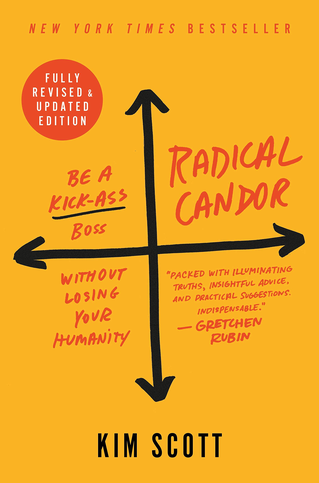
Care for the Person
Challenge them directly
Books to Read on this Topic
Radical Condor
Question: Describe how you will handle a situation where others you were working on a project program disagreed with your approach and ideas. What will you do?